

Anhui Wenyao Intelligent Photoelectronic Technology Co., Ltd.

How Does a Rice Color Sorter Machine Work? A Complete Guide in 2026

Table of Content [Hide]


    1. Introduction of Rice Color Sorter Machine


    With the continuous growth of global grain consumption and rising food export standards, modern rice processing factories are pursuing higher grain purity and stable product grades. Traditional manual sorting cannot eliminate discolored rice, broken grains, foreign impurities, and moldy kernels efficiently. Manual sorting is labor-intensive, time-consuming, and easily affected by human error. A rice color sorter and intelligent rice sorting machine have become essential processing equipment in rice milling industries. A professional rice colour sorter utilizes optical recognition and intelligent algorithms to separate defective rice from qualified grains automatically. Whether you need a standard rice sorter machine or an advanced rice colour sorting machine, optical sorting equipment greatly improves production efficiency, reduces manual costs, and ensures food safety for final rice products.


    2. Working Principle of Rice Color Sorter Machine


    2.1 Main System Composition

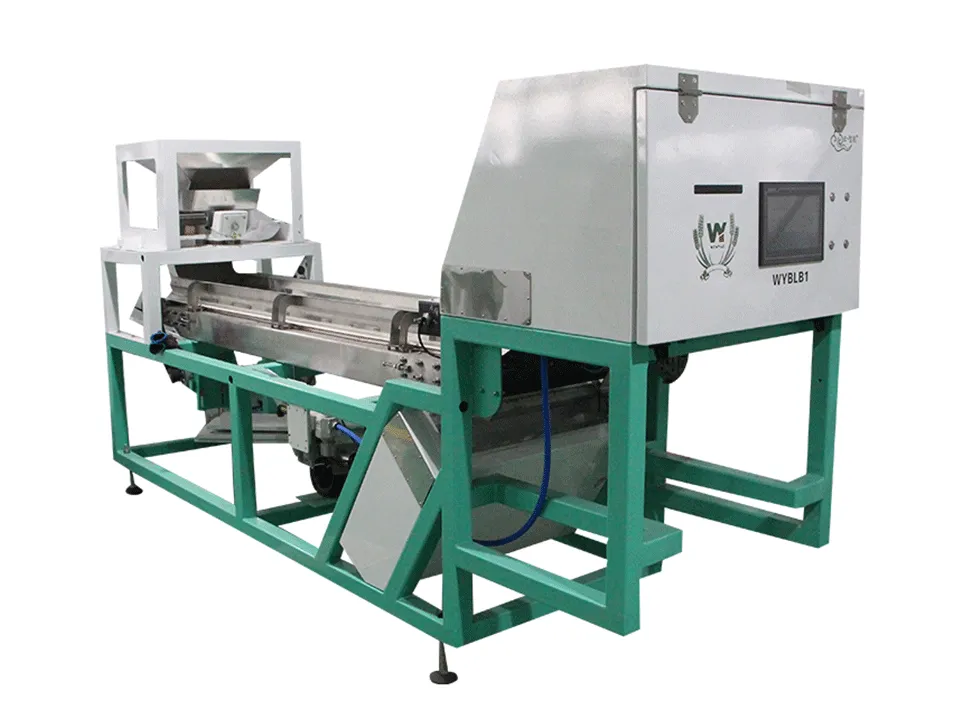
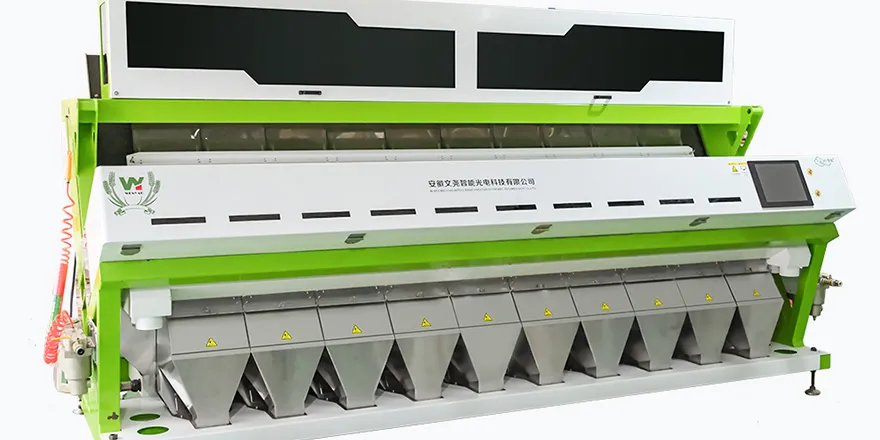
    A high-performance rice color sorter machine consists of five core functional systems to achieve stable and precise sorting performance. These systems include a feeding system, optical detection system, intelligent control system, constant lighting system, and high-speed pneumatic ejection system. Every system cooperates closely to ensure low error rates and high throughput during rice processing.

    2.2 Complete Sorting Workflow

    The entire sorting process of the rice sorter is automatic and continuous. Raw rice is firstly transported from the material hopper to the vibrating chute for uniform feeding. Then rice grains smoothly flow into the sorting chamber. High-definition CCD and CMOS cameras capture real-time grain images under stable lighting. The intelligent control system instantly analyzes color, shape, and surface defects. Once defective grains are identified, high-speed nozzles accurately eject unqualified rice and foreign materials. Clean and high-quality finished rice falls into the finished product bin. The whole process repeats without manual intervention.


    3. Rice Sorting Machine Technological Evolution and Innovative Features


    Modern rice colour sorter equipment has upgraded significantly compared with traditional sorting machines. The integration of AI and machine learning enables the rice sorting machine to memorize various rice defects and improve recognition accuracy continuously. Multi-spectrum and NIR near-infrared technology effectively identifies invisible mildew, internal impurities, and subtle color differences. High-frequency solenoid valves realize ultra-fast and low-air-consumption ejection. Meanwhile, IoT intelligent connection supports remote monitoring, data statistics, and parameter adjustment. Energy-saving circuit design and low-noise mechanical structure make the rice color sorter machine more environmentally friendly and durable for long-term industrial operation.


    4. Core Advantages and Practical Value of Rice Color Sorter


    4.1 Labor Saving and Cost Reduction

    Replacing tedious manual selection, an automatic rice sorter machine dramatically cuts labor expenses and reduces human error. Continuous 24-hour operation greatly improves production efficiency and shortens processing cycles.

    4.2 Higher Rice Grade and Market Value

    By removing yellow rice, black grains, broken rice, and heterochromatic particles, the rice colour sorting machine improves rice uniformity, brightness, and overall appearance. Processed rice meets high-end market standards and gains higher commercial premiums.

    4.3 Food Safety and Export Compliance

    Advanced optical sorting technology eliminates harmful impurities such as stones, plastic fragments, and moldy grains. The rice color sorter strictly complies with international food safety regulations, making export grain inspection easier and reducing return risks.

    4.4 Stable Return on Investment (ROI)

    Although optical sorting equipment requires initial investment, the reduction of labor cost, waste reduction, and product value improvement allow most rice mills to recover costs within a short period. The long service life and low maintenance cost further enhance the economic benefits of the rice sorting machine.


    5. Equipment Types and Application Scenarios


    5.1 Common Rice Sorter Types

    According to structural differences, mainstream sorting equipment includes chute-type rice color sorter machine and belt-type sorting machines. RGB full-color models are suitable for high-precision fine sorting, while composite multi-functional types support mixed grain processing. Users can select different channel configurations based on output requirements.

    5.2 Application for Different Rice Varieties and Production Scale

    The intelligent rice colour sorter is compatible with white rice, parboiled rice, glutinous rice, and brown rice. Small-capacity machines suit mini milling factories, while large-channel industrial rice sorter units serve large-scale grain processing plants.

    5.3 Selection Suggestions

    Customers should confirm daily output, rice type, impurity proportion, and factory space before purchasing a rice sorting machine. Professional manufacturers provide customized configuration solutions to match personalized processing demands.


    6. Operation, Maintenance and Best Practices


    Standardized daily operation ensures stable performance of the rice color sorter machine. Operators need to check feeding status, light system, and air pressure before startup. Regular cleaning of camera lenses, chutes, and nozzles prevents dust accumulation affecting sorting precision. Timely replacement of wearing parts prolongs equipment service life. Common troubleshooting includes material blockage, low sorting accuracy, and unstable ejection, which can be solved through systematic parameter resetting and daily maintenance.


    7. Real Application Case Display


    A medium-sized rice milling plant in Southeast Asia upgraded its production line with our WY intelligent rice color sorter machine, replacing manual sorting and outdated sorting equipment.


    Before the upgrade, the plant faced 3 major pain points:

    · High broken rice rate (~8%), inconsistent color grading, and frequent customer returns

    · Manual sorting required 12 workers per shift, with monthly labor costs exceeding $4,000

    · Impurities such as stones, moldy kernels, and foreign particles were difficult to remove, risking export order rejections


    After installing the rice sorting machine:

    · The broken rice rate dropped to 2.1%, with a 99.8% impurity removal accuracy

    · Labor costs were cut by 45%, eliminating 5 full-time sorting positions

    · The qualified rice sales volume increased by 22%, with zero quality complaints in 6 months

    · The plant successfully obtained export certification and secured 3 long-term international contracts


    Many rice mills that adopt our rice colour sorter have achieved cleaner grain quality, higher market pricing power, and stable, compliant production for both domestic and global markets.


    8. Conclusion & Call to Action

    As an indispensable grain processing device, the rice color sorter continuously empowers modern rice milling industries with AI intelligence, optical precision, and stable mechanical performance. Whether you choose a standard rice sorting machine or an upgraded rice colour sorter, optical sorting technology will definitely become the core competitiveness of grain enterprises. With the upgrading of food safety standards, intelligent, energy-saving, and high-precision sorting equipment will dominate the grain machinery market in the future.


    If you are looking for a reliable rice color sorter machine or need customized grain sorting solutions, feel free to contact our professional team. Submit an inquiry form to obtain free technical parameters, factory quotations, and one-to-one selection guidance.


    9. Frequently Asked Questions (FAQ)

    Q1: Can one rice colour sorter process multiple types of rice?

    Yes. Our multifunctional rice colour sorter supports white rice, brown rice, parboiled rice, and glutinous rice. Users can switch sorting modes with one click to adapt to different grain materials.

    Q3: How accurate is an automatic rice sorter machine?

    A high-end rice sorter machine adopts high-definition CCD cameras and AI algorithms, achieving a sorting accuracy of up to 99.8%. It can precisely remove yellow rice, moldy grains, stones, and tiny foreign matter.

    Q4: Is a rice color sorter machine difficult to maintain?

    No. The rice color sorter machine features a dustproof structure and easy-to-clean design. Regular lens cleaning and simple nozzle inspection are enough to keep long-term stable operation, requiring minimal maintenance costs.

    Q5: What capacity rice sorting machine is suitable for small rice mills?

    Small and medium-sized rice sorting machine with 1 to 6 chutes is ideal for mini mills. It occupies less space, consumes lower power, and meets daily processing demands for small-scale rice production.

    Q6: Does your rice colour sorting machine support customized settings?

    Yes. Our intelligent rice colour sorting machine allows customized sensitivity, ejection intensity, and feeding speed. It can perfectly adapt to different impurity rates and personalized grain quality standards.


    Quanwen Bi, Mechanical Designer & Company Founder
    Quanwen Bi, Mechanical Designer & Company Founder

    Founded Anhui Wenyao Intelligent Photoelectronic Technology Co., Ltd. in 2007, with over 20 years of experience in color sorter design.

    References
    wenyao
    We use cookies to offer you a better browsing experience, analyze site traffic and personalize content. Part of the tracking is necessary to ensure SEO effectiveness,
    By using this site, you agree to our use of cookies. Visit our cookie policy to learn more.
    Reject Accept