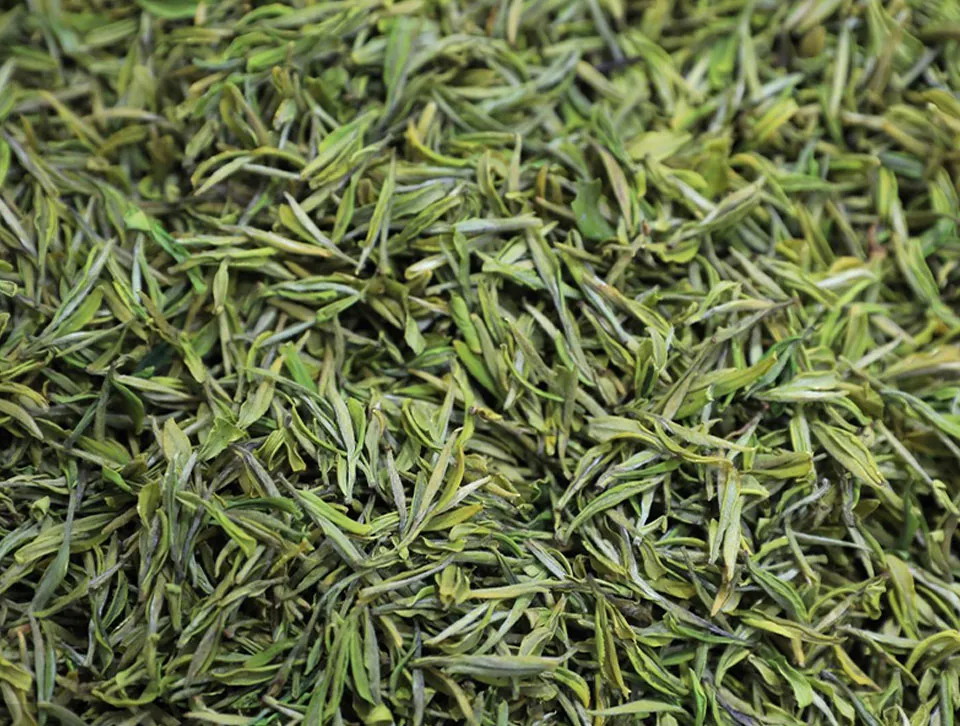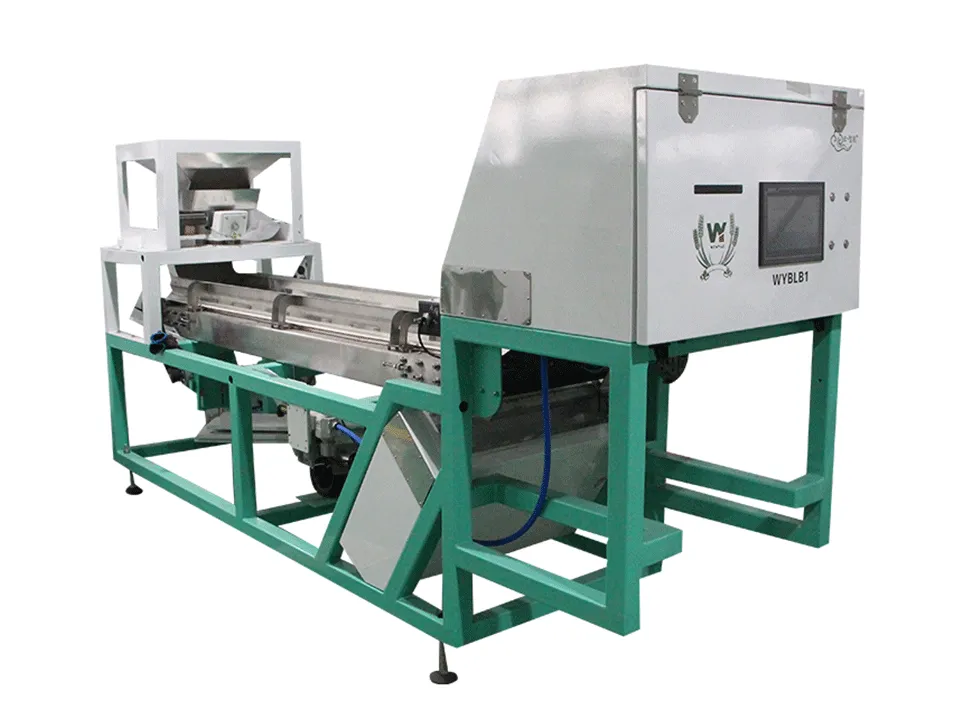
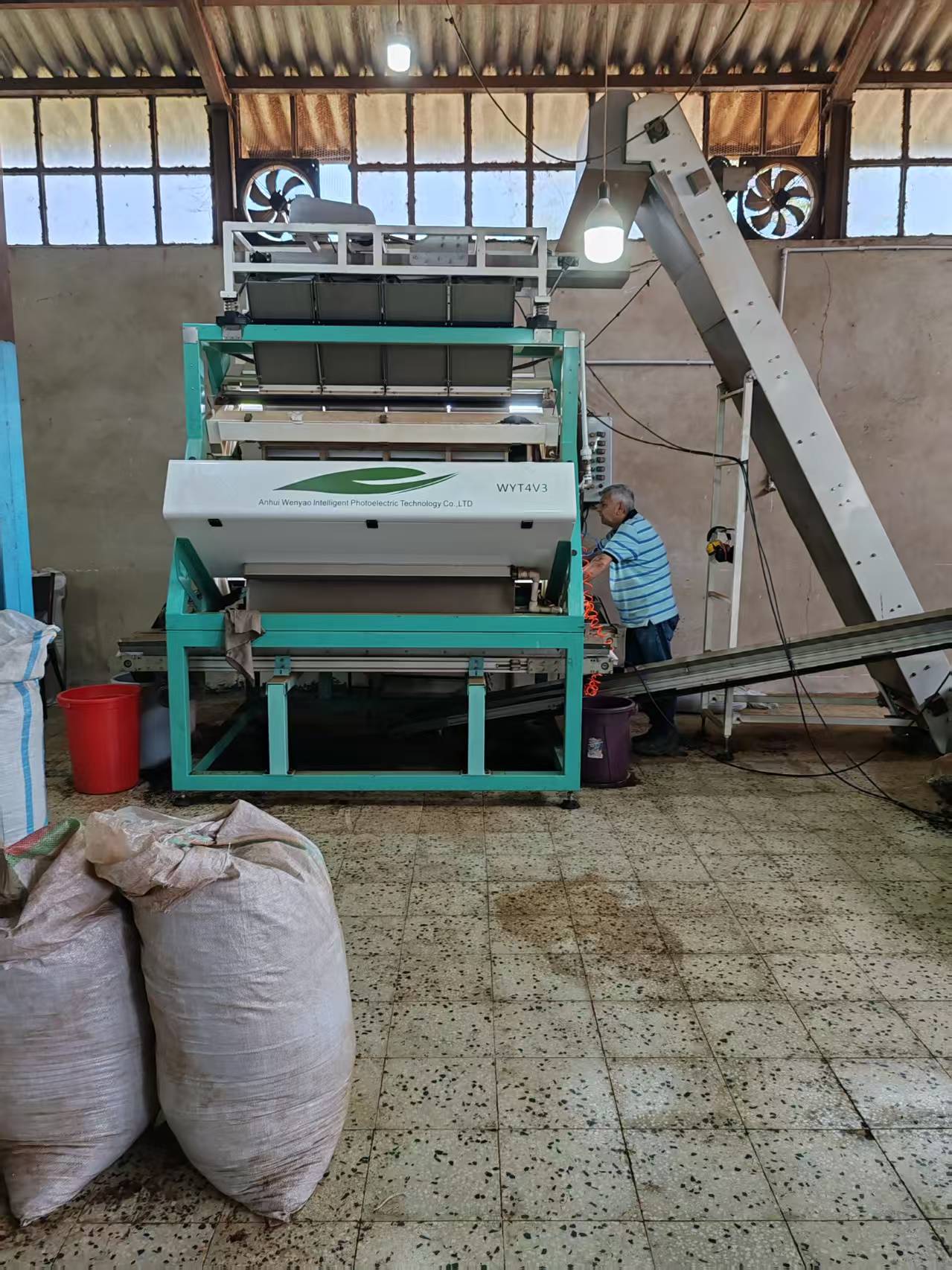
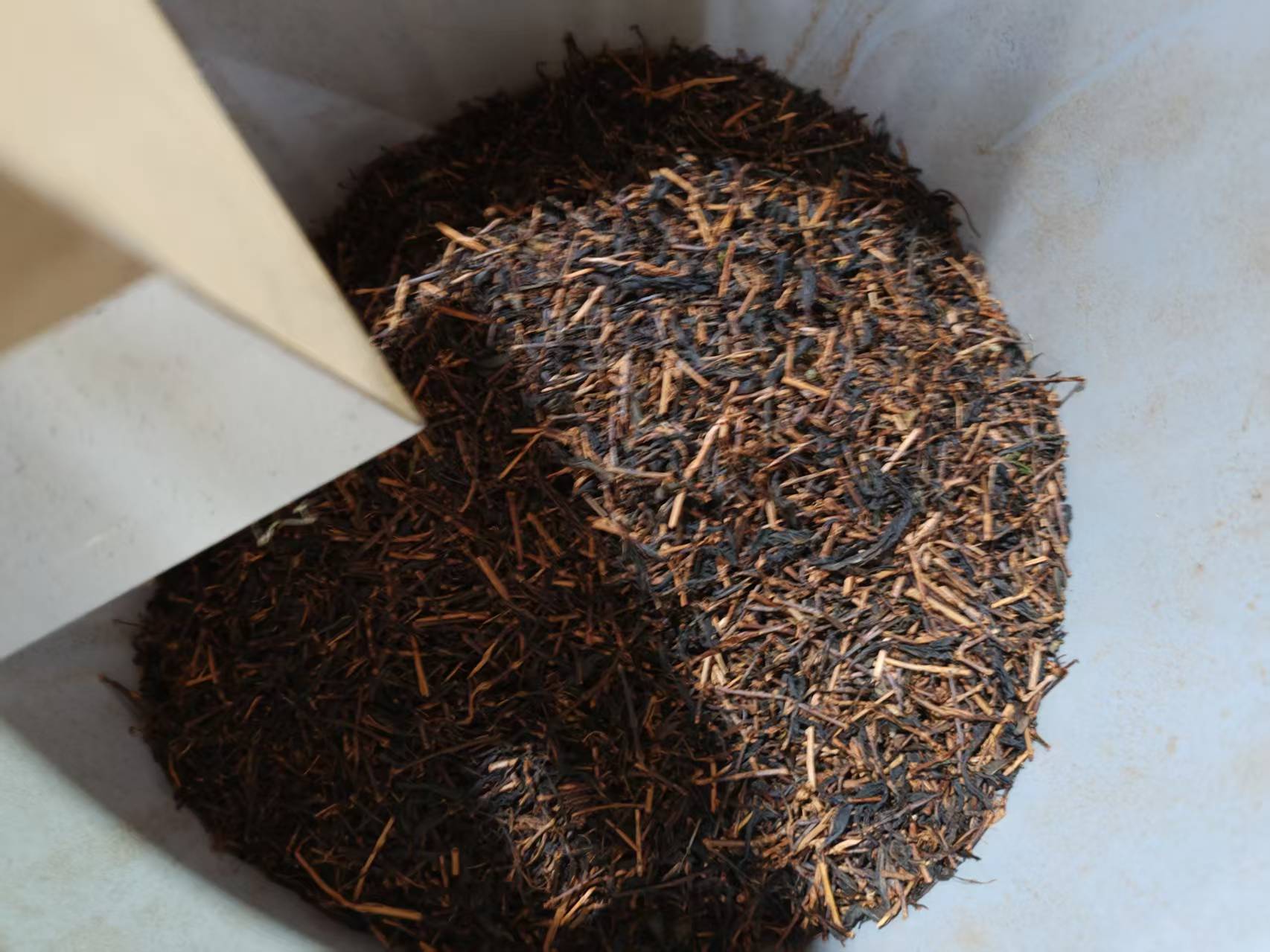


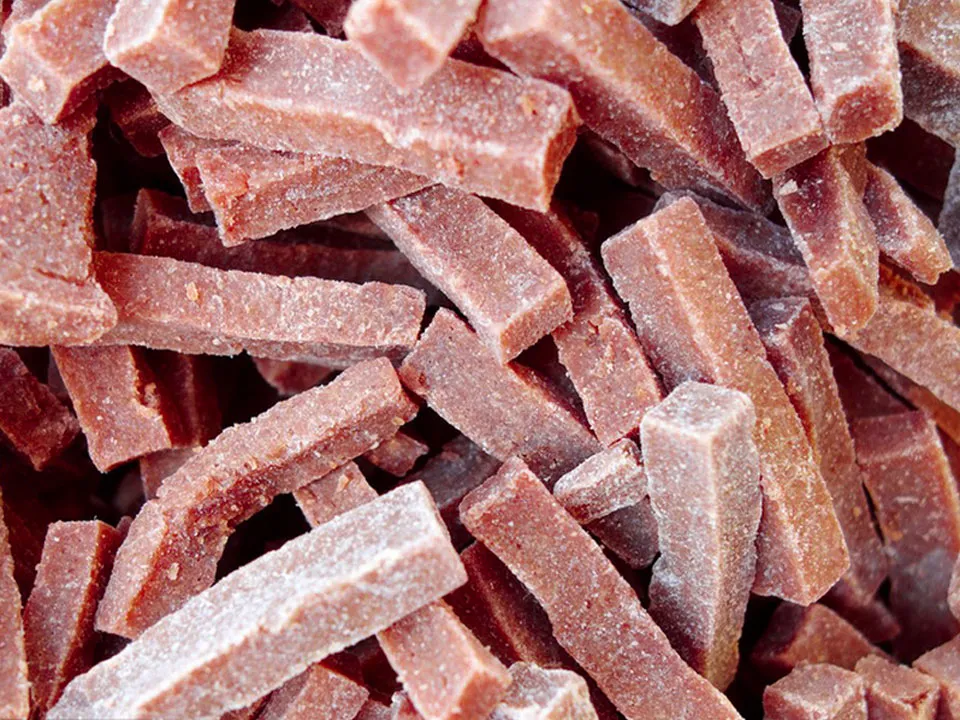
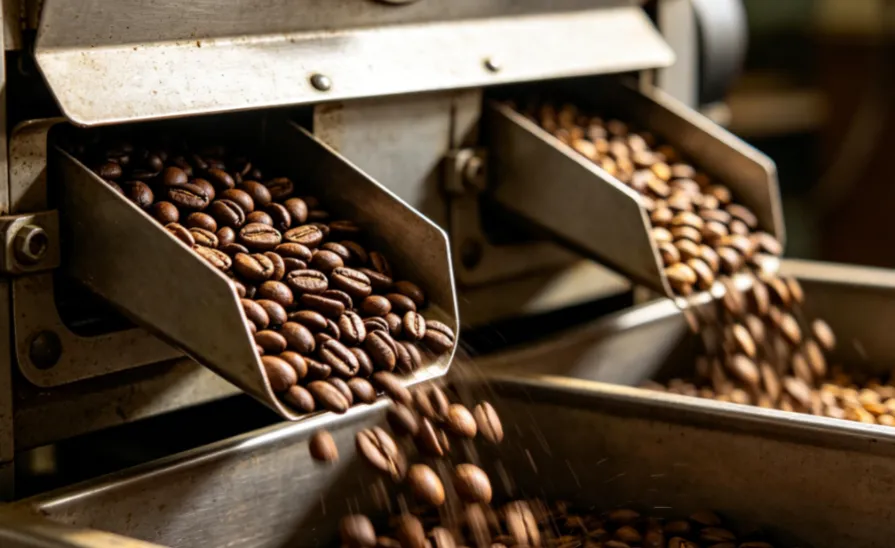
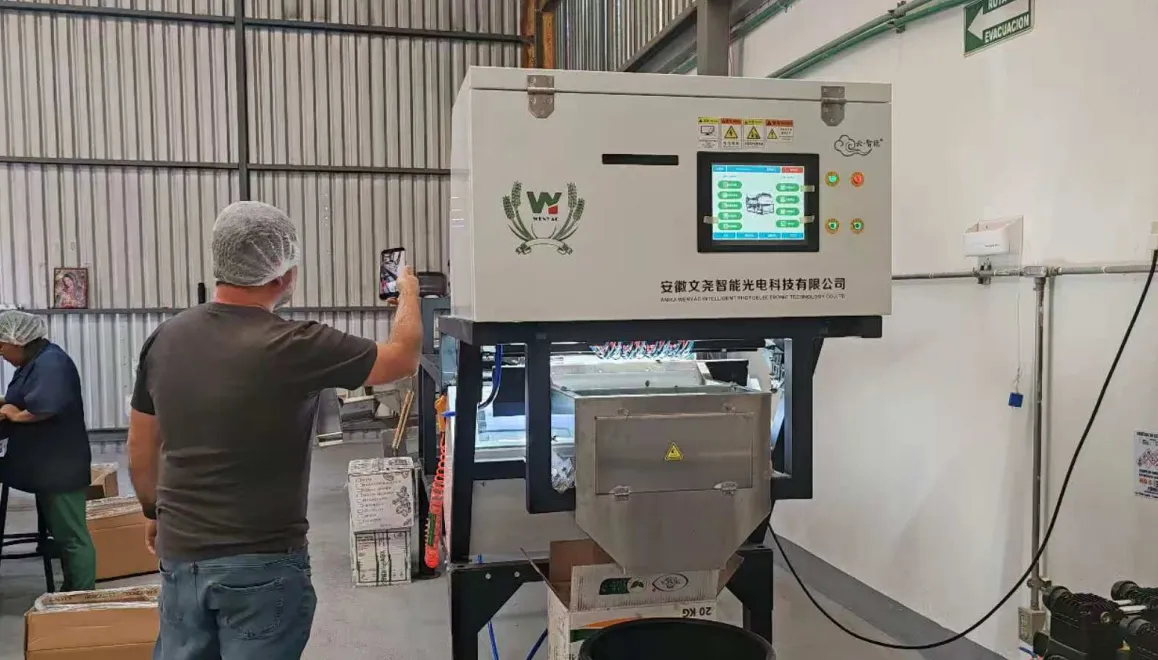
Iranian customers use our tea sorting machine to accurately identify and gently remove stems, yellow leaves, old leaves, and non-tea impurities. The sorting process is extremely gentle, perfectly preserving the entire shape and tender buds of the tea leaves, locking in their original flavor and nutritional components.
1. Industry Background and Core Challenges
Tea production requires meticulous sorting to ensure final product quality. Traditional tea sorting methods face several limitations:
Labor Intensive: Manual sorting is time-consuming and requires skilled workers, with inconsistent results across different workers.
Quality Inconsistency: Human sorting cannot maintain uniform standards, leading to variable product quality.
High Cost: Labor costs continue to rise while finding skilled tea sorters becomes increasingly difficult.
Contamination Risk: Manual handling increases the potential for contamination and hygiene issues.
2. Technical Principles and Advantages of Tea Color Sorters
Modern tea color sorters utilize advanced optical technology to achieve precise sorting:
High-Resolution Imaging: Using high-precision CCD cameras with resolution up to 0.1mm² per pixel to detect subtle color variations and physical defects.
Multi-Spectral Analysis: Combining visible light with infrared spectroscopy to identify internal quality characteristics beyond surface appearance.
AI-Powered Recognition: Deep learning algorithms continuously improve sorting accuracy by analyzing thousands of tea leaf samples.
Table③: Technical Specifications of Modern Tea Color Sorters
| Table: Technical Specifications of Modern Tea Color Sorters | |||
| Parameter | Traditional Manual | Basic Color Sorter | Advanced Color Sorter |
| Sorting Speed | 2-3 kg/hour/person | 50-80 kg/hour | 100-150 kg/hour |
| Accuracy Rate | 85-90% | 95-97% | 98-99.5% |
| Defect Detection | Visible defects only | Color+Size | Color+Size+Shape+Internal Quality |
| Labor Required | High | Minimal | Fully Automated |
3. Key Benefits and Economic Analysis
The implementation of color sorters in tea processing delivers significant advantages:
Quality Improvements:
Removal of stems, yellow leaves, and foreign materials with 99% accuracy
Preservation of whole leaf integrity through gentle handling systems
Consistent sorting standards maintained 24/7
Economic Benefits:
Labor Cost Reduction: Sorting costs decrease from $2.5-3.5/kg (manual) to $0.3-0.5/kg (automated)
Quality Premium: Properly sorted tea commands 15-25% higher market prices
Throughput Increase: Processing capacity increases by 300-400% compared to manual sorting
Table④: Economic Analysis of Tea Color Sorter Implementation
| Table: Economic Analysis of Tea Color Sorter Implementation | |||
| Economic Indicator | Manual Sorting | Color Sorter | Improvement |
| Sorting Cost ($/kg) | 2.5-3.5 | 0.3-0.5 | 85% reduction |
| Daily Output (kg) | 20-30 | 80-120 | 300% increase |
| Product Rejection Rate | 8-12% | 1-2% | 80% reduction |
| ROI Period | - | 6-9 months | Rapid payback |
4. Technical Implementation Features
Gentle Handling System:
Specially designed vibration feeders prevent leaf damage
Low-pressure air ejection preserves leaf integrity
Adjustable sorting parameters for different tea varieties
Smart Detection Capabilities:
Distinguishes between similar-colored stems and leaves
Identifies subtle quality variations invisible to human eye
Removes non-tea materials (hair, plastic, insects)
Hygiene and Safety:
Food-grade stainless steel construction
Easy-clean surfaces and accessible maintenance points
Compliance with international food safety standards
5. Application Scope
Tea color sorters effectively handle various tea types:
Green Tea: Removing yellow leaves and stems while preserving tender buds
Black Tea: Sorting fermented leaves by color consistency
Oolong Tea: Identifying improperly processed leaves
White Tea: Protecting delicate silver needles during sorting
Pu-erh Tea: Removing foreign materials from aged tea
6. Future Development Trends
The technology continues to evolve with several key trends:
IoT Integration: Real-time monitoring of sorting performance and predictive maintenance
Multi-dimensional Sorting: Combining color, shape, size, and spectral analysis
Mobile Connectivity: Remote operation and parameter adjustment via smartphones
Energy Efficiency: Reduced power consumption through optimized design
Compact Designs: Space-saving models for small to medium tea producers
7. Conclusion
Color sorting technology has revolutionized tea processing by delivering unprecedented levels of efficiency, consistency, and quality control. The technology enables tea producers to achieve:
Superior Product Quality through precise, consistent sorting
Significant Cost Savings by reducing labor requirements
Enhanced Market Competitiveness through improved product appearance
Better Hygiene Standards with reduced human handling
Increased Production Capacity to meet growing market demands
With rapid ROI typically within 6-9 months and ongoing operational benefits, color sorters represent a strategic investment for tea producers seeking to compete in premium markets while optimizing production costs.
Data Source: Tea Processing Industry Analysis Report 2024
Note: Performance data based on industry averages, actual results may vary by specific conditions